Gear & Safety
How Long Do Resistance Bands Last? (2026 Data and Care)
Maker lifespans side by side, lab fatigue data and a cycle counter for your routine.
- 6 min read
- 12 sources
- Calculator
A seven-listing spec audit: what fabric band makers disclose about latex, resistance and care.
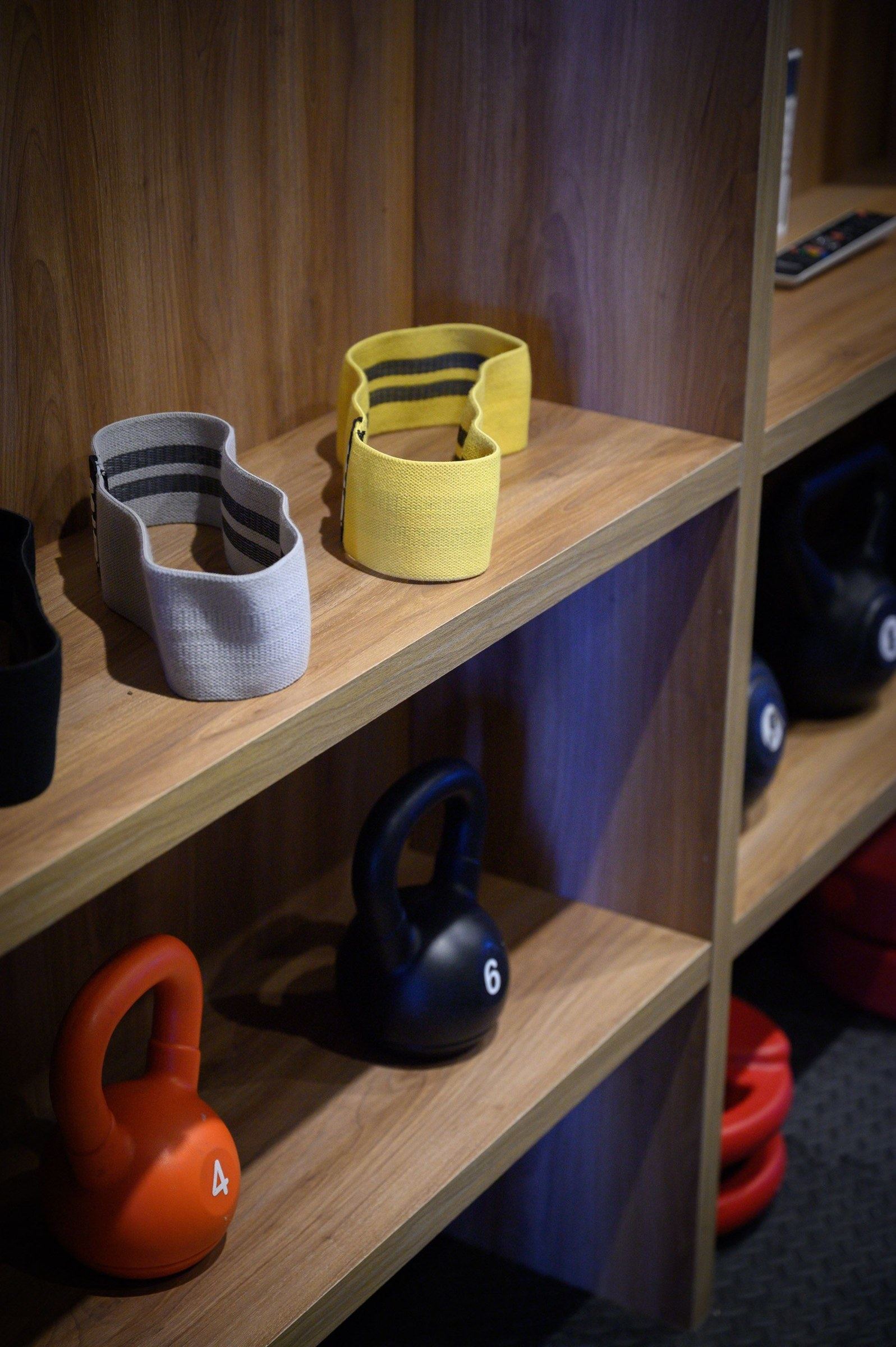
Fabric resistance bands are short loops of woven cloth with elastic threads inside. They are built for leg and hip work, where thin rubber bands tend to roll up, slip or pinch. The cloth stays flat against the skin, and grip strips inside hold it in place.
We read the spec sheets of seven fabric band listings side by side. The results surprised us. Most contain latex, none claims to be latex free and none says how far the band was stretched to get its pounds.
Fabric resistance bands are cloth loops woven with elastic, usually latex or rubber thread. They stay put on the thighs, do not roll and feel softer than latex bands. They are best for glutes and hips. Do not assume they are latex free: most listings we read name latex or rubber in the material.
Fabric bands are now standard in gyms and group classes. Les Mills, the group fitness brand, sells its own set of three for its classes. Brands now sell long fabric loops too. PrimeBuild lists 82-inch fabric loops rated from 15 to 90 lb, aimed at pull-ups and standing exercises.
Factories have also started explaining how the bands are made. One maker describes the process as weaving fabric yarn with elastic, then cutting and sewing the loops before testing the resistance. The elastic part is often latex or rubber thread.
A fabric band is not just cloth. Cloth alone does not stretch back. The stretch comes from elastic fibers woven into the fabric.
Here is what seven listings say about their materials.
| Listing | Stated material | Latex or rubber named? |
|---|---|---|
| Les Mills Sculpt Bands | 70% polyester, 20% cotton, 10% latex | Yes, latex |
| Forza | Polyester and cotton, reinforced with natural rubber | Yes, natural rubber |
| Onyx | 50% cotton, 50% polyester, latex thread | Yes, latex |
| Yescom | Polyester fabric and elastic latex blend | Yes, latex |
| DMoose | Cotton-elastic blend, rubber grip strips | Rubber, type not named |
| Power Systems | Fabric woven with elastic; silicon/rubber strips | Rubber, type not named |
| PrimeBuild | Woven fabric sleeve | Not stated |
Four of the seven name latex or natural rubber. Two more use rubber grip strips without saying what kind. None of the seven says it is latex free.
That matters if you have a latex allergy. The American College of Allergy, Asthma and Immunology (ACAAI) explains that the allergy is to proteins in natural rubber latex. Symptoms can include hives and itching, or a runny nose. A severe reaction can cause anaphylaxis.
The ACAAI also notes that synthetic rubber is not the same as natural latex and does not trigger the allergy. The problem is that a fabric band listing rarely tells you which one it uses.
If you have a latex allergy, do not treat fabric as a safe default. Look for a band clearly sold as latex free. TheraBand, for example, makes latex-free bands that it says match the pull of its latex bands. Ask the seller in writing if the label is unclear.
Fabric bands are rated in pounds, usually as light to heavy. The ranges vary a lot between brands.
| Listing | Light | Heavy |
|---|---|---|
| Power Systems | 14-25 lb | 40-55 lb |
| Forza | 17.6-26.5 lb | 35.3-44.1 lb |
| Yescom | 18-32 lb | 45-70 lb |
| Les Mills | 28 lb | 40 lb |
Even the lightest fabric band here is rated above TheraBand’s gold band, which pulls 14.2 lb at double its length. Fabric bands are stiff for their size, so they suit big leg and hip muscles.
There is a catch. TheraBand and Rogue Fitness both say their pounds are measured at a 100% stretch. None of the seven fabric listings we read says at what stretch its pounds were measured. So you cannot compare a fabric band’s pounds with a latex band’s, or even with another fabric brand’s.
Use the resistance levels within one set as a ladder. Our resistance band colors guide explains why stretch matters so much.
It depends on the exercise.
Most people who train at home end up with both: fabric bands for the lower body and latex bands for everything else. For barbell and pull-up work, see our resistance bands for pull ups guide.
Fabric bands come in fixed sizes, and size changes the feel. Yescom’s three bands are 13, about 15 and about 17 inches long, all 3 1/8 inches wide. Les Mills uses one 22.5-inch loop in three widths.
A shorter loop stretches more on the same thigh, so it feels harder. If a band feels too tight to move, a longer size may help more than a lighter level.
Here the brands disagree.
When in doubt, hand wash in cool water with mild soap and air dry flat. Heat is the common enemy across every care label, because it breaks down the elastic fibers. Keep bands out of hot cars and direct sun.
Makers claim so. Fabric does not tear the way a thin latex band can. But the stretch still comes from elastic thread, which wears out with use and heat. TheraBand says even its bands lose some pull over time and are “not meant to last a lifetime.”
Check the stitching and the inner grip strips. Retire a band when the seam frays or the grip peels. Our how long do resistance bands last guide covers wear signs for every band type.
Fabric resistance bands are the best tool for leg and hip work because they stay put and feel good against the skin. Treat their pound ratings as a ladder within one set, not a number to compare. If you have a latex allergy, check the label carefully, since most fabric bands still contain latex.
Written by the Workout Resistance Bands research desk
We pull numbers from primary sources, show our working and fix mistakes in public. First published . Spot an error? Tell us and we will correct it and change the date above.
Gear & Safety
Maker lifespans side by side, lab fatigue data and a cycle counter for your routine.
Gear & Safety
Nine CPSC recalls analyzed, plus a stack estimator for what your tubes pull at real stretch.