Workouts
Resistance Band Squat (2026): Form, Set-Ups and Load Math
Set-ups from loop to barbell, with load math for the bottom and top of the rep.
- 6 min read
- 7 sources
- Calculator
An assistance calculator shows why band help fades near the bar, plus a progression plan.
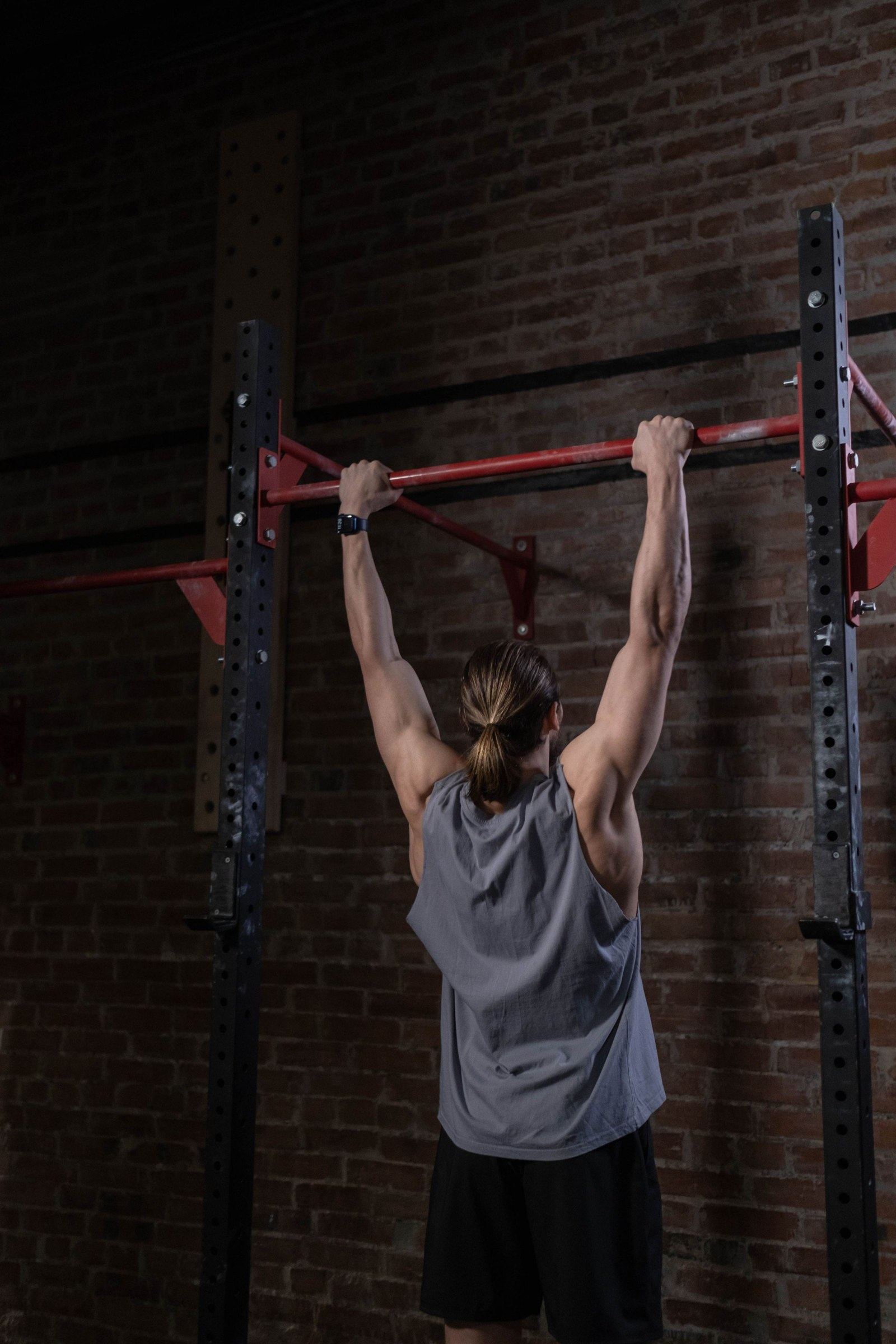
Resistance bands for pull ups take part of your body weight off the bar, so you can train the full movement before you can do it alone. A loop band hooks over the bar and you put a foot or knee in the bottom. The band pushes up hardest when you hang and least when your chin nears the bar.
This guide shows how much help resistance bands for pull ups really give at each point of the rep. It also covers which band to start with, the set-up that gave the most reps in a study and when to step down.
Resistance bands for pull ups are long loop bands rated by how hard they pull at double their length. Pick one that lets you do about 5 to 8 clean reps. The band gives the most help at the bottom and very little at the top, so finish each session with a few unassisted attempts.
Pull-up bands are now sold almost entirely as long loops of natural latex in color-coded sets. Rogue Fitness lists eight Monster Bands from 9 lb to 225 lb, with each lbs resistance figure taken at a 100% stretch, and it names its three mini bands as best for pull-up assistance.
The research on resistance bands for pull ups has also moved on from “do bands help.” A study in the Journal of Australian Strength and Conditioning compared set-ups and found that how you rig the band changes how many reps you get. We cover that below.
A pull-up asks you to lift your body weight. Assistance bands lift part of it for you. The more the band stretches, the harder it pulls.
When you hang at the bottom, the band is at its longest. That is where it helps most. As you pull up, the band shortens and its pull drops. Near the bar it may barely help at all.
That is why assisted pull-ups often feel easy off the bottom and hard at the top. The band is doing the most work in the part of the lift where you need it least.
We modeled a 180 lb person using a Rogue Fitness #3 green Monster Band. Rogue rates it at 40 lb at a 100% stretch. A 41-inch loop hung over a pull-up bar forms a doubled strand about 20.5 inches long. Say it stretches to 41 inches at a dead hang, and you rise 18 inches.
| Band | Help at dead hang | Share of 180 lb | Help near the top | Share of 180 lb |
|---|---|---|---|---|
| #2 blue (30 lb) | 30 lb | 17% | 3.7 lb | 2% |
| #3 green (40 lb) | 40 lb | 22% | 4.9 lb | 3% |
| #4 black (65 lb) | 65 lb | 36% | 7.9 lb | 4% |
With the green band, you lift about 140 lb at the bottom and about 175 lb near the top. The help at the bottom is about 8 times the help near the top. These are estimates from the maker’s ratings and a simple stretch model, not lab measurements.
Enter your body weight, your band’s rating and the band lengths at the bottom and top. The calculator shows how much of your body weight the band carries at each point.
To use the calculator with your own resistance bands for pull ups, measure the band from the bar to your foot or knee while you hang. Then measure again with your chin at the bar. The difference is roughly how far you travel.
Choose resistance bands for pull ups by reps, not by color. Pick the lightest band that lets you do about 5 to 8 clean reps with a full hang at the bottom.
Rogue’s own guide groups its bands this way, from light to heavy:
Each maker uses its own colors and pounds. A Rogue red is not a red from another brand. Check the maker’s chart, not the color alone. Our resistance band colors guide explains why.
There are two common ways to rig the band.
A study by Piper and colleagues tested both with 33 people. Each did one set to failure per set-up, at least 72 hours apart.
The authors summed it up: the vertical set-up gave about twice the reps, and the horizontal set-up about three times. The study counted reps but did not measure band force. So it shows the horizontal set-up gives more help, without telling you exactly how much.
A knee in the band shortens the loop compared with a foot. A shorter loop stretches less, so it usually gives a little less help. Use the same set-up each session so your progress is easy to compare.
A user on Physical Fitness Stack Exchange asked how to get from 1 strict pull-up to 10 or more. They weighed 135 lb and could do 7 to 12 reps with a purple band.
Their own follow-up answer described what worked best: mix assistance levels in one session.
Another answer gave a simpler plan. Start with 3 sets of as many strict reps as you can, then switch to assisted pull-ups for the rest of the session.
Both plans share one idea about resistance bands for pull ups. The band builds volume, but you still need practice at full body weight, especially at the top where the band helps least.
Move to a lighter band when you can do about 10 to 12 clean reps for all your sets. If you have only one band, slow the lowering phase to 3 seconds or pause near the bar. That works the top range where the band does little.
Keep a few unassisted attempts in every session. That is how most people build strength at the top of the rep. It is also the point of resistance bands for pull ups: a path to doing them without one.
Not every band is meant to carry body weight, so check what your resistance bands for pull ups are sold for. TheraBand’s care page tells users not to use its bands “to lift or support body weight.” Those are thin therapy bands. Long loop bands, such as Rogue’s, are sold for pull-up assistance.
Before each set, check the band for nicks and tears, especially where it wraps the bar. Step in slowly, and never let go of the band while it is stretched. Our how long do resistance bands last guide covers wear and replacement. A home gym set-up with a sturdy bar matters as much as the band.
Resistance bands for pull ups let you train the real movement long before you can do it alone. They help most at the bottom and least at the top, so they are a bridge, not a crutch. Pick a band that allows 5 to 8 reps, step down as you improve and always finish with unassisted attempts.
Written by the Workout Resistance Bands research desk
We pull numbers from primary sources, show our working and fix mistakes in public. First published . Spot an error? Tell us and we will correct it and change the date above.
Workouts
Set-ups from loop to barbell, with load math for the bottom and top of the rep.