
Resistance
Resistance Bands vs Weights (2026): What the Trials Show
The corrected meta-analysis, variable-resistance studies and a load-curve calculator.
- 7 min read
- 9 sources
- Calculator
Maker charts read line by line, with the stretch math that decides what a color really pulls.
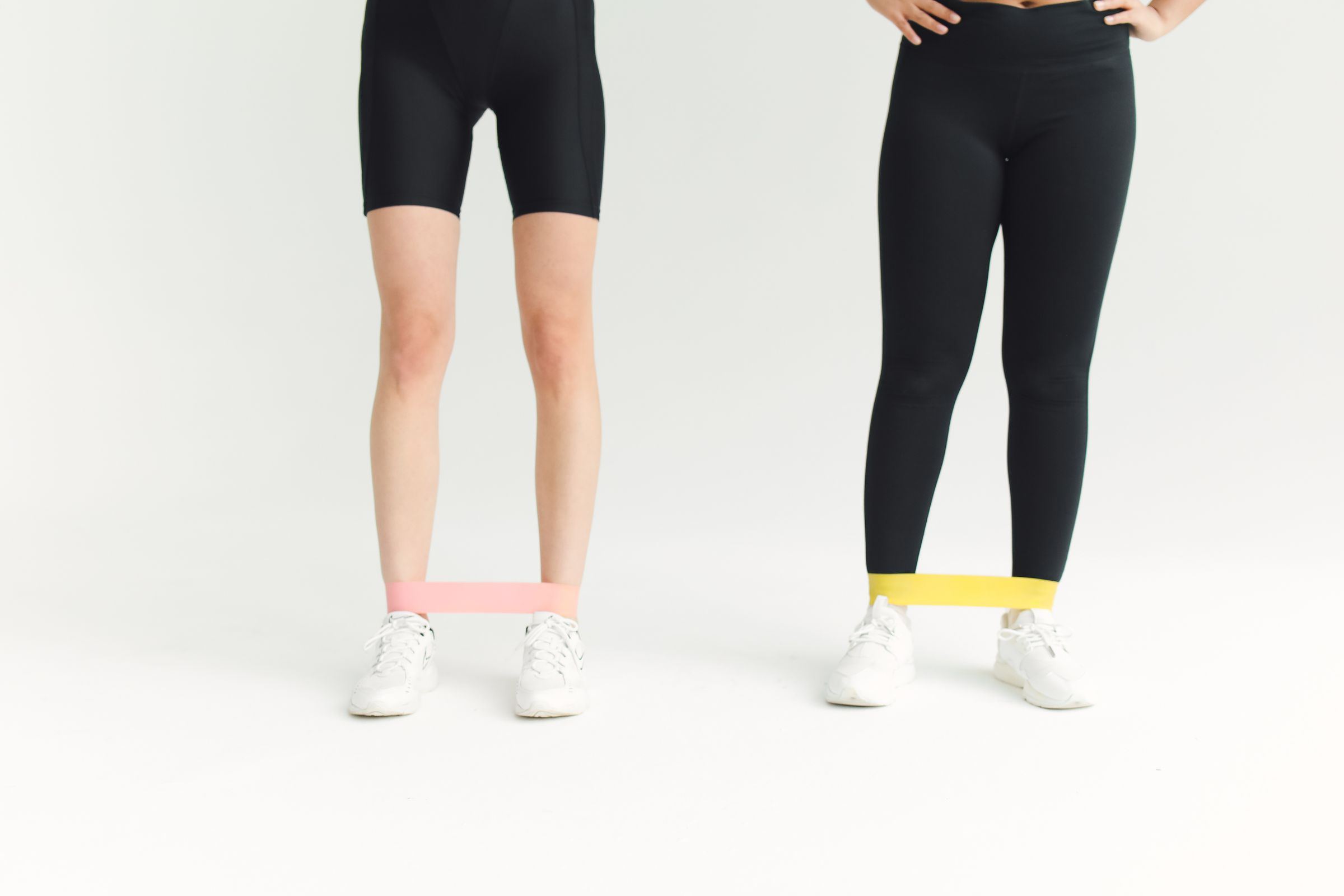
Resistance band colors are a code for how hard a band pulls. Light colors pull less. Darker colors pull more, and the metallic ones pull most. The catch is that the code only holds inside one brand, and the pounds printed on a chart are only true at one stretch.
This guide reads the most widely used chart of resistance band colors line by line. It shows what the numbers mean, how much force you get at your own stretch and why two brands can give one color very different numbers.
Resistance band colors run light to heavy. On the TheraBand chart, the order is tan, yellow, red, green, blue and black, then silver and gold at the top. Each color pulls harder at the same stretch. A green band gives about 4.6 lb at double its length and 6.7 lb at triple. Colors only compare within one brand.
TheraBand now has a plain-language color guide on its own shop site. It lists seven colors for its CLX loop bands, from yellow at 3.0 lb to gold at 14.2 lb. It also repeats the key warning: the numbers are for comparing colors, not for treating a band like a fixed dumbbell.
Heavy loop bands are the other big change on store shelves. Brands such as Rogue Fitness sell long loop bands rated in the tens and hundreds of pounds. Those bands use their own colors. Their red is not TheraBand red.
TheraBand is the brand most physical therapists know. Its color system comes from a chart published by Performance Health, the company that makes the bands. The chart lists “typical values” in pounds at two stretches.
| Band color | Pounds at 100% stretch | Pounds at 200% stretch | Step from the color before |
|---|---|---|---|
| Tan | 2.4 | 3.4 | lightest |
| Yellow | 3.0 | 4.3 | 25% |
| Red | 3.7 | 5.5 | 25% |
| Green | 4.6 | 6.7 | 25% |
| Blue | 5.8 | 8.6 | 25% |
| Black | 7.3 | 10.2 | 25% |
| Silver | 10.2 | 15.3 | 40% |
| Gold | 14.2 | 21.3 | 40% |
A 100% stretch means the band is twice its resting length. A 200% stretch means it is three times as long. The maker’s own example uses a 2-foot green band. Stretched to 4 feet, it pulls 4.6 lb. Stretched to 6 feet, it pulls 6.7 lb.
Performance Health also groups resistance band colors by use. Tan and yellow suit the early stages of rehab. Red and green suit people starting a strength program. Blue and black are for more advanced users, as are silver and gold.
Here is the first thing most charts skip. When you stretch a band twice as far past its resting length, the pull does not double.
We divided each 200% figure on the chart by its 100% figure. The result runs from 1.40 for black to 1.50 for silver and gold. The average is 1.46. So going from double length to triple length adds a bit under half again, not twice the force.
That matters for planning. If a set feels too easy, stepping back to stretch the band further gives a modest bump. Moving up one band color gives a cleaner jump.
The chart says each step from tan to black is a 25% increase. The printed pounds tell a slightly different story. Yellow to red is 23%. Red to green is 24%. Green to blue and blue to black are both 26%.
The jumps to silver and gold are much bigger, at 40% and 39%. A gold band pulls 4.7 times what a yellow band pulls at the same stretch. That spread of resistance levels is wide for one chart, and it is why the top two colors feel like a different tool.
A Brazilian lab study tested the same eight color levels with an industry tensile test. It found the yellow and red bands were not statistically different from each other. The authors suggested you could skip yellow and go from tan to red.
The chart gives two points for each of the resistance band colors. Real exercises sit somewhere between, or below. Enter your band color and how long the band is at rest and at full stretch. The calculator works out the stretch and the pull.
Measure the length of exercise band that is actually stretching, from hand to anchor. A long exercise band wrapped around your hand twice has a shorter working length than you might think.
There is no shared standard for resistance band colors. Each maker picks its own. A Rogue Fitness Monster Band is a 41-inch loop of natural rubber. Rogue rates its red #1 band at 18 lb at a 100% stretch. A TheraBand red flat band is rated at 3.7 lb at the same stretch.
Even the same band can carry different numbers. Rogue’s own page lists its Monster Bands like this. Two resellers list the same bands with much higher figures.
| Rogue Monster Band | Rogue's rating | Reseller listing | Reseller vs Rogue |
|---|---|---|---|
| #0 Orange | 9 lb | 15 lb | 67% higher |
| #1 Red | 18 lb | 30 lb | 67% higher |
| #2 Blue | 30 lb | 50 lb | 67% higher |
| #3 Green | 40 lb | 65 lb | 63% higher |
| #4 Black | 65 lb | 100 lb | 54% higher |
| #5 Purple | 95 lb | 140 lb | 47% higher |
| #6 Red | 115 lb | 175 lb | 52% higher |
| #7 Silver | 225 lb | 200 lb | 11% lower |
Rogue adds a note that its figures “are reasonable estimates due to variances in manufacturing.” Our takeaway is simple. Trust the maker’s own page over a reseller’s copy, and never compare pounds across brands unless both are quoted at the same stretch.
Rogue’s table shows how resistance band colors track size. Every Monster Band is 41 inches long. Most are 0.18 inches thick. The pull rises mainly with width, from a quarter inch on the orange band to 4 inches on the silver one.
TheraBand works the other way. Its flat latex bands are 5 inches wide. Thickness and the rubber blend set each color. Performance Health says its bands and its tubing pull about the same for matching resistance band colors.
Pick resistance band colors by control, not by pride. You should be able to move slowly through the whole range for every rep.
If you are between two colors, choose the lighter one and stretch it further. The same advice applies to fabric bands, which use their own light-to-heavy labels. Our resistance bands vs weights guide shows how that rising pull compares with a dumbbell.
Chart values for resistance band colors are for new bands. Rubber loses some pull as it is used. Performance Health says the pull force “does decrease some” over time. Lab work by Simoneau and others found measurable force loss after only hundreds of stretch cycles.
That is one more reason to treat the chart as a guide. Our how long do resistance bands last guide covers wear and storage. It also covers when to replace a band.
Resistance band colors tell you which band is harder, not exactly how hard. Use one brand’s chart, measure your stretch and expect the pull to rise less than you might think as you stretch further. Move up a color when the band you have no longer challenges you.
Written by the Workout Resistance Bands research desk
We pull numbers from primary sources, show our working and fix mistakes in public. First published . Spot an error? Tell us and we will correct it and change the date above.
Resistance
The corrected meta-analysis, variable-resistance studies and a load-curve calculator.