
Gear & Safety
Fabric Resistance Bands (2026): Specs, Latex and Care
A seven-listing spec audit: what fabric band makers disclose about latex, resistance and care.
- 5 min read
- 12 sources
- Spec audit
Nine CPSC recalls analyzed, plus a stack estimator for what your tubes pull at real stretch.
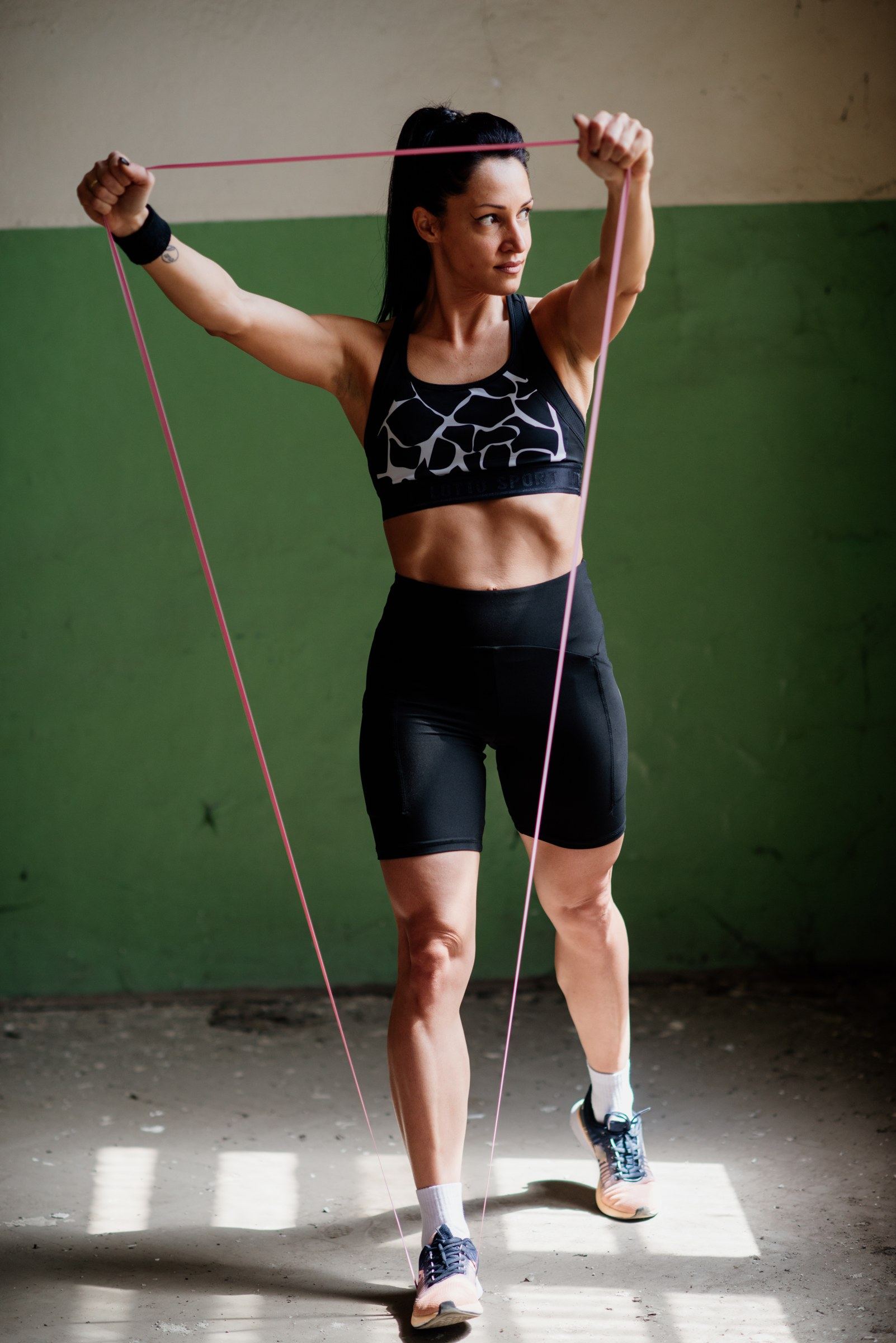
Resistance tubes with handles are hollow latex cords with a grip at each end. You can stand on them, clip them to a door anchor or stack several on one handle. They work like a portable cable machine for rows and presses.
They also have a clear failure pattern. We read every U.S. product recall for exercise tubes and bands that the Consumer Product Safety Commission (CPSC) lists. Almost every one failed at the hardware, not the tube. This guide shows what that means for buying and using them.
Resistance tubes with handles are latex tubes with grips, used for rows and presses. Stackable sets clip several tubes together. The weak points are the joints and door anchors, not the tube. Inspect those before each workout, wear eye protection and remember that rated pounds depend on stretch.
In May 2026, the CPSC announced a recall of HomeProGym stackable bands. The purple 60 lb and gray 70 lb bands could “forcefully separate from the handle during use.” The company had five reports of separation and no injuries. About 700 units were sold.
That recall fits a long pattern. It is the ninth recall of resistance tubes or bands in the CPSC database since 2011, and once again the problem was the connection.
Most tubes are natural rubber. A handle at each end connects through a strap or a clip. Some use a grommet. Some systems let you clip several tubes onto one handle.
Here are three typical listings.
Exercise tubing is common in physical therapy because handles make each move easy to set up and repeat. Flat bands, or plain resistance bands with handles clipped on later, give more choice of grip and length.
The CPSC recall database returns nine recalls for resistance tubes and bands. Together they cover about 1.2 million units.
| Year | Product | Failure point | Units |
|---|---|---|---|
| 2026 | HomeProGym stackable bands | Band separates from handle | About 700 |
| 2019 | SPRI Ultra Heavy bands | Band separates from handle | About 95,000 |
| 2017 | Dick's Fitness Gear tubes | Tube breaks | About 207,500 |
| 2015 | SKLZ Recoil 360 trainer | Weld on a belt ring breaks | About 52,000 |
| 2014 | Bollinger bands | Door anchor ball releases | About 63,000 |
| 2013 | Perfect Fitness bands | Band detaches from cloth loop | 75,600 |
| 2011 | Target Embark cords | Door anchor ball releases | About 447,000 |
| 2011 | Dick's tubes | Plastic handle clip breaks | About 229,000 |
| 2011 | EB Brands tubing | Handle breaks or detaches | About 29,700 |
Eight of the nine failed at a connection point, such as a handle or an anchor. Only one, the 2017 Dick’s recall, was the tube itself breaking. That recall listed 12 reports of tubes breaking, including two people struck by a broken tube and one who fell.
The door anchor recalls are the most serious. Target reported three cases of people struck in the eye by a door anchor ball. Two resulted in permanent vision loss.
The recall pattern points to where you should look.
Remember that a door anchor is part of the system. A broken anchor can fly back at you just like a broken handle.
Stackable sets clip several tubes onto one handle. A popular set from Whatafit includes five tubes rated at 10, 20, 30, 40 and 50 lb. Stacked together, that is 150 lb.
But a rating is only true at one stretch. A Bodylastics black band is rated at 19 to 80 lb “depending on how far it’s stretched.” That is about 4.2 times from the low end to the high end of one band.
So “150 lb” is the most you get at the stretch the maker used. Most tube makers do not say what stretch that is. If the rating is at a 100% stretch, a 44-inch tube pulled to 66 inches is only at a 50% stretch, and a 150 lb stack gives about 75 lb.
Enter the ratings of the tubes you clip together, your tube length and how far you pull it. The calculator assumes ratings are at a 100% stretch, which you should check with your maker.
Stacking also adds strain on the clips and handles. Those are the parts that fail most often in the recall record, so check them more often when you load a handle with several resistance bands.
Each type suits different work.
If you want a cable-machine feel at home, tubes are the best choice. If you want the simplest, most durable option, a loop band has no joints at all. Our resistance band colors guide explains how pull changes with stretch.
Tubes can build real strength. Trials comparing elastic tubing and bands with weights found similar strength gains. Our resistance bands vs weights guide covers the evidence.
Work through a full range of motion and pick resistance levels that make 8 to 15 reps hard. When a tube gets easy, stack a second one. That is where stackable resistance tubes with handles shine.
Resistance tubes with handles give you a cable-machine workout in a bag. The recall record shows the risk sits at the handles and anchors, not the tube. Inspect those joints, wear eye protection, anchor on the hinge side and treat stacked pounds as a best-case number.
Written by the Workout Resistance Bands research desk
We pull numbers from primary sources, show our working and fix mistakes in public. First published . Spot an error? Tell us and we will correct it and change the date above.
Gear & Safety
A seven-listing spec audit: what fabric band makers disclose about latex, resistance and care.
Gear & Safety
Maker lifespans side by side, lab fatigue data and a cycle counter for your routine.